About the Author
Kahlil Gibran was a Lebanese-American artist, poet, and visionary writer. Drawn to the written word from a remarkably young age, he began his literary journey in Arabic before expanding his voice into English, allowing his wisdom to reach a far wider audience. Over the course of his lifetime, Gibran produced approximately twenty-five works, leaving behind a legacy that continues to resonate across cultures and generations.
About the Book
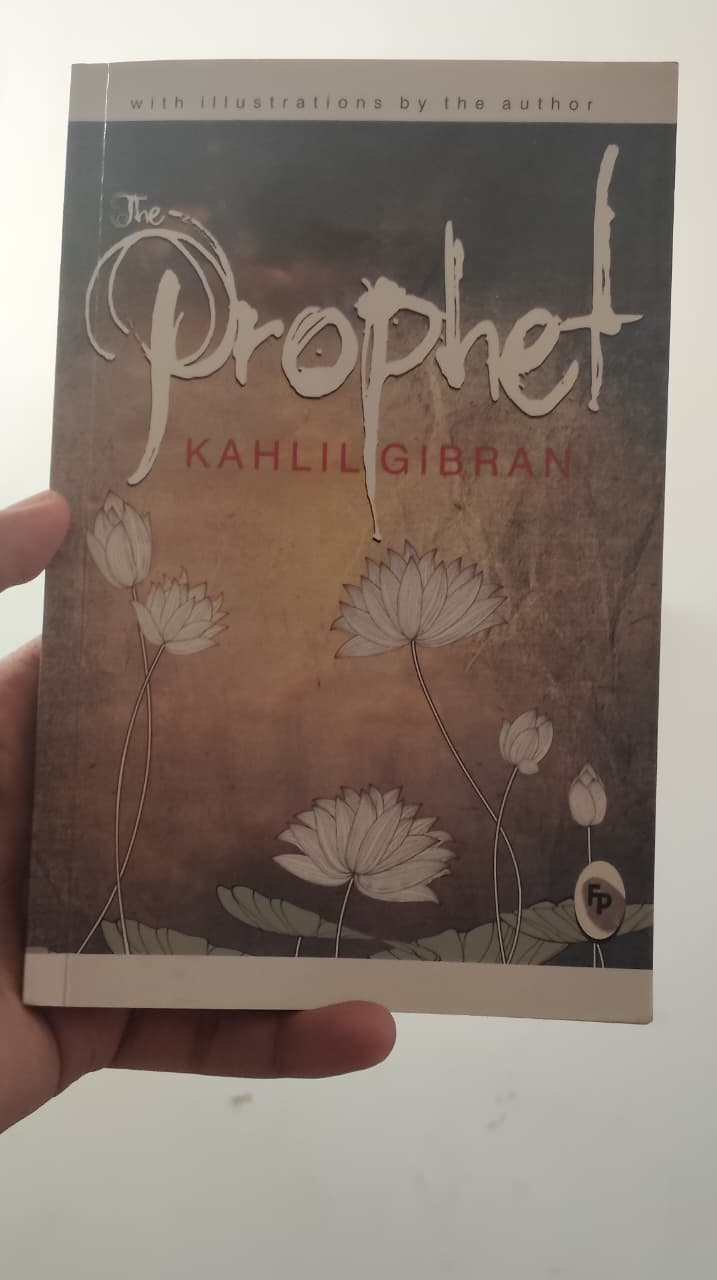
The Prophet is not merely a book, it is an experience. At its core, it explores the profound relationship between human beings and the world they inhabit, touching on nearly every dimension of existence: birth, love, work, marriage, and death. It is a book that does not simply tell you what to think but invites you to feel and reflect.
The story follows Almustafa, the Prophet, who has lived in a foreign city for twelve long years. Just as he is about to board a ship that will carry him back to his homeland, he is approached by a group of people who implore him to share his wisdom before he departs. What follows is a series of profound teachings on the deepest truths of life. Gibran dedicated more than eleven years to crafting and perfecting this masterpiece ,and every word reflects that devotion.
I Will talk of, Three Pillars of the Book
1. Love
Gibran's treatment of love is perhaps the most celebrated aspect of The Prophet. He strips love of its superficiality and presents it in its purest, most liberating form:
"When love beckons to you, follow him. Love possesses not, nor would it be possessed. For love is sufficient unto love. Love has no desire but to fulfill itself."
This is a radical idea, that true love neither seeks to own nor to be owned. It exists freely, asking nothing in return but the freedom to express itself. In a world where love is so often tangled with expectation and possession, Gibran's words serve as a quiet but powerful reminder of what love, at its best, truly is.
2. Religion & Freedom
Gibran challenges conventional notions of religion and worship, urging readers to find the sacred in the everyday:
"Your daily life is your temple and your religion. Whenever you enter into it, take with you your all."
He draws a beautiful parallel between the body and a temple, a vessel that houses the soul and, by extension, the divine. To care for one's body is therefore not vanity, but reverence. To pray is not merely a ritual directed outward toward God but an intimate conversation with one's own soul. This perspective bridges the gap between the spiritual and the physical, reminding us that the sacred is not confined to places of worship; it lives within us.
3. Joy & Sorrow
One of the most thought provoking insights in the book is Gibran's portrayal of joy and sorrow as two sides of the same coin:
"Your joy is your sorrow unmasked. The deeper that sorrow carves into your being, the more joy you can contain."
Like darkness that makes the stars shine brighter, sorrow deepens our capacity for joy. The two are not opposites, they are companions, inseparable and interdependent. To have known great grief is to have made room for great happiness. This is perhaps Gibran's most comforting truth: that no sorrow is ever wasted, for it is quietly shaping the space within us that joy will one day fill.
Thought for this Book
The Prophet is a timeless work that speaks to the soul in a language both simple and profound. It does not offer easy answers but instead holds up a mirror to our deepest questions about love, freedom, faith, and the human condition. Whether you are encountering it for the first time or returning to it after years, it always has something new to offer, because you, as a reader, are never quite the same person twice.
It is, without question, a book that deserves a place on every thoughtful reader's shelf.
The Prophet by Kahlil Gibran: A Reflective Review